Introduction
Choosing an archery sight involves more than simply selecting the number of pins. The design of the sight can influence how much visual information appears inside the housing, how adjustments are made, and how easily an archer can understand the relationship between distance and the aiming reference.
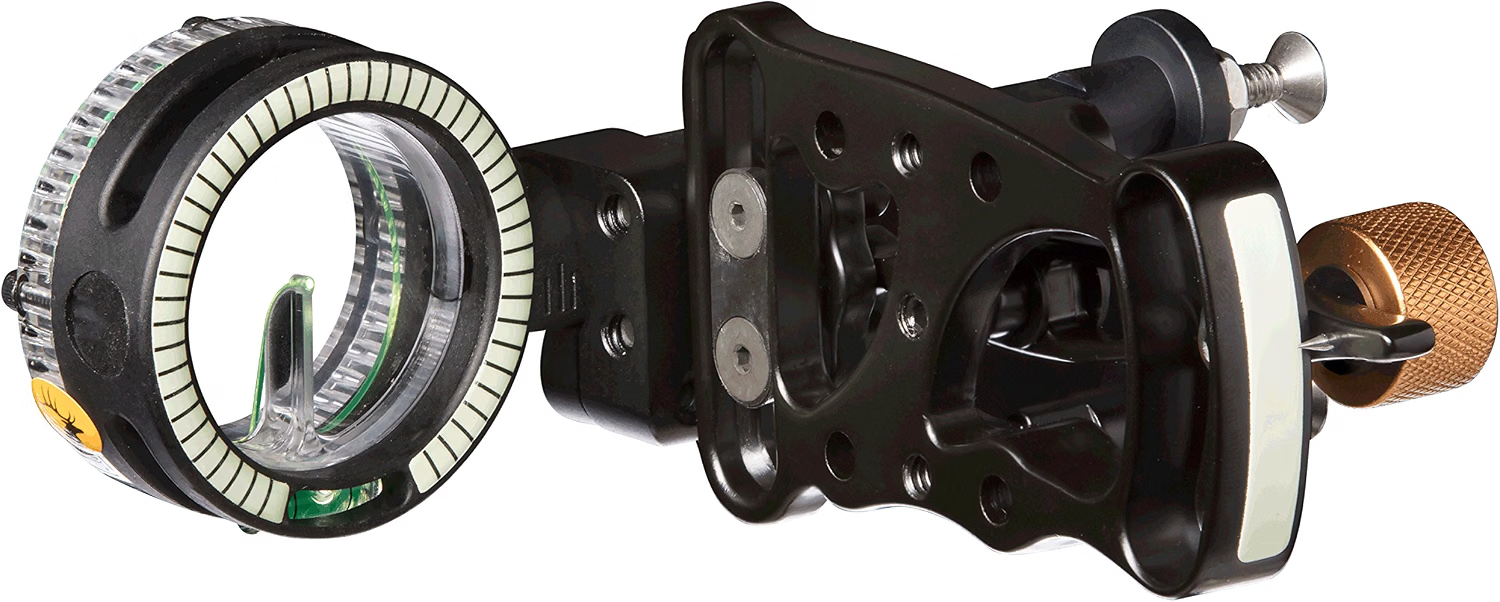
The Trophy Ridge Drive Slider Bow Sight, Black, is a single-pin adjustable bow sight designed around a movable sight housing. The product is identified as model AS301 and is listed as a right-handed sight with a .029-inch fiber-optic pin. Product information also identifies an adjustable indicator pin, nylon bushings, an integrated bubble level, low-light glow indicator tape, and an included sight light.
Unlike a fixed multi-pin sight, a single-pin slider uses one primary aiming reference that can be repositioned for different distances. This creates a relatively uncluttered sight picture, while the slider mechanism provides a way to change the vertical position of the sight housing.
That design has advantages and tradeoffs. A single-pin system can simplify the visual field, but it also requires the archer to manage the sight position when changing distances. A multi-pin sight provides several fixed references but places more visual elements inside the housing.
Understanding these differences is useful when deciding what type of archery sight fits a particular bow setup and shooting style.
This article examines the Trophy Ridge Drive Slider from an informational perspective, including its main components, the purpose of the fiber-optic pin, the role of the slider mechanism, the importance of the bubble level, general maintenance, compatibility considerations, and differences between common bow-sight categories.
Key Features
Single-Pin Slider Design
The defining characteristic of the Drive Slider is its single-pin configuration.
Rather than placing several fixed pins at different vertical positions, the sight uses one primary fiber-optic pin that can be moved as part of the slider system.
This approach reduces the number of aiming references visible at one time.
For archers who prefer a simple sight picture, a single-pin design can be easier to visually interpret than a housing containing several pins.
The tradeoff is that the sight position must be changed when the intended shooting distance changes.
The Drive Slider is listed with one .029-inch pin.
.029-Inch Vertical Fiber-Optic Pin
The sight uses a relatively large .029-inch vertical fiber-optic pin.
Fiber-optic material gathers ambient light and directs it toward the visible end of the fiber, creating a bright aiming reference under suitable lighting conditions.
The .029-inch specification describes the diameter of the fiber-optic pin.
A larger fiber can provide a more noticeable visual reference, although pin size also affects how much of a small target may be visually obscured.
This is one reason pin diameter is an important specification when comparing archery sights.
Adjustable Indicator Pin
The Drive Slider includes an adjustable indicator pin.
This component works with the slider system as a visual reference for the sight’s position.
The product information describes the indicator pin as allowing fine adjustments in relation to changing conditions.
An indicator system can be useful because a movable sight needs some way of relating the housing position to a particular setting.
Rather than relying only on the physical position of the housing, an indicator provides another visual reference.
Nylon Bushings
The slider mechanism uses nylon bushings.
Product descriptions specifically identify nylon bushings as a feature intended to provide smooth movement without metal-to-metal contact.
This is primarily a mechanical design consideration.
Nylon bushings can reduce direct contact between moving metal components and can help provide controlled movement of the slider assembly.
The actual feel of a mechanical adjustment can still vary depending on installation, cleanliness, wear, and the condition of the sight.
Integrated Bubble Level
The sight incorporates a bubble level.
A bubble level provides a visual indication of whether the bow is being held at the intended orientation.
In archery, keeping the bow consistently aligned is important because unwanted cant can influence the relationship between the bow, sight, and arrow.
A built-in level therefore provides a useful reference during setup and practice.
It is not a substitute for proper shooting technique, equipment setup, or consistent form.
Glow Indicator Tape
The Drive Slider is described as including glow indicator tape designed to provide a visible reference under changing or lower-light conditions.
This feature is different from an electronic display.
The tape does not turn the sight into a powered electronic optic. Instead, it provides a visual reference associated with the slider’s position.
The effectiveness of any glow material depends on how it is exposed to light and the surrounding conditions.
Sight Light
The product includes a sight light.
A sight light can provide additional illumination for the fiber-optic aiming reference when permitted and appropriate.
Because lighting conditions can change substantially outdoors, having a dedicated light source can provide another way of maintaining visibility.
Users should follow the applicable archery rules and the manufacturer’s instructions regarding sight-light use.
Aluminum Construction
Available product information identifies aluminum as the construction material for the sight.
Aluminum is widely used in archery accessories because it offers a balance of rigidity and weight.
The material specification alone does not establish how an individual sight will perform under every environmental condition. Installation, impacts, storage, moisture, and normal wear can all affect mechanical equipment.
Right-Hand Orientation
The listed AS301 configuration is identified as right-handed.
Hand orientation is an important compatibility consideration.
Archery sights are not universally interchangeable between left-handed and right-handed configurations.
Anyone considering this model should verify the required orientation before purchasing.
Understanding a Single-Pin Sight
A single-pin sight uses one main aiming reference.
The pin can be positioned for the distance being addressed.
This is different from a multi-pin sight, where several pins remain visible simultaneously.
For example, a multi-pin sight might have separate reference points associated with several preset distances.
A single-pin slider instead provides one primary reference that changes position.
The main conceptual benefit is simplicity.
There are fewer visual references competing for attention.
However, the archer needs to adjust the sight position when changing distances.
This creates an important difference in how the two systems are managed.
How the Slider System Works
The slider is the mechanical part of the sight that allows the sight housing to move vertically.
The position of the housing changes the relationship between the aiming reference and the bow.
The indicator system helps the archer identify the slider’s position.
The product is specifically described as providing adjustable positioning through its slider design.
A slider system therefore combines two concepts:
- A movable sight housing.
- A reference system for identifying the housing position.
This is fundamentally different from a fixed multi-pin sight, where the individual pins stay in predetermined locations.
How It Can Be Used
Target Archery Practice
A movable single-pin sight can be used as part of a structured target-archery practice setup.
An archer can work with different distances while using the same primary aiming reference.
This can help keep the sight picture visually simple.
For safe practice, archers should use an appropriate range, a suitable backstop, and equipment that is correctly maintained.
Recreational Archery
The sight can also be considered for general recreational compound-bow use when the mounting system and sight orientation are compatible.
The product is listed as a bow sight and is associated with hunting and archery applications.
Local rules and range requirements should always be followed.
Bow Setup and Familiarization
A movable sight can be useful when learning how changes in sight position affect the sight picture.
Rather than treating the sight as a fixed component, the archer can understand how its vertical movement corresponds to different distance settings.
This is primarily an equipment-familiarization process and should be performed in a controlled archery environment.
Practice in Changing Light
The fiber-optic pin, glow indicator tape, and included sight light are designed around visibility.
That can make the system relevant for archers who practice under different outdoor lighting conditions.
However, fiber-optic visibility is influenced by ambient light, while the sight light introduces an additional powered source.
Neither should be interpreted as a night-vision system.
Who It May Be Suitable For
Archers Who Prefer a Simple Sight Picture
A single-pin system places one main aiming reference inside the housing.
This may appeal to archers who prefer not to have multiple pins visible at once.
Users Interested in Movable Sights
The Drive Slider is specifically built around a movable sight mechanism.
It may therefore be relevant to archers who want a slider-style sight rather than a fixed-pin arrangement.
Right-Handed Archers
The listed model is right-hand oriented.
Users should confirm the exact configuration because left-handed archers may require a different version.
Archers Who Value Fiber Optics
The .029-inch vertical fiber-optic pin provides a large visual reference.
This may be relevant to users who prefer a clearly visible pin rather than a smaller fiber.
Recreational and Hunting Archers
The product is marketed for archery and hunting applications.
For hunting, users must also comply with applicable regulations concerning archery equipment, seasons, and permitted methods.
Important Things to Consider
Confirm Hand Orientation
The AS301 version associated with the product is listed as right-handed.
This should be verified before purchase.
A sight designed for one orientation may not provide the appropriate setup for an archer using the opposite hand.
Check Bow Compatibility
A bow sight needs to be mechanically compatible with the bow’s riser and mounting points.
The fact that two products are both described as archery equipment does not guarantee compatibility.
The manufacturer’s specifications and the bow manufacturer’s mounting information should be checked together.
Understand the .029-Inch Pin
Pin diameter affects visibility.
A larger pin can be easier to see, particularly when lighting is less favorable.
At the same time, a larger pin occupies more visual space.
For small targets or longer-distance target work, some archers may prefer a smaller pin because it can cover less of the target.
This is a matter of sight-picture preference rather than a universal advantage.
A Slider Requires Position Management
The main tradeoff of a single-pin slider is straightforward.
The sight provides one primary reference, but that reference changes position.
This means the archer needs to manage the slider setting appropriately.
A fixed multi-pin sight does not require the same type of vertical movement because its individual pins remain in place.
Sight Setup Should Be Verified
Any sight installation should be checked carefully before normal use.
Mounting hardware should be secure.
The sight housing should not have unexpected movement.
The bubble level should be properly positioned according to the manufacturer’s instructions.
The slider should move as designed and remain secure when positioned.
Fiber Optics Depend on Lighting
Fiber optics work by collecting available light.
They are therefore affected by the environment.
A fiber that looks highly visible outdoors during daylight may behave differently in a heavily shaded environment.
The included sight light can provide additional illumination, but users should understand the difference between passive fiber optics and powered illumination.
Weather Can Affect Equipment
Archery equipment can be exposed to rain, dust, humidity, and temperature changes.
After use in wet conditions, equipment should be inspected and dried according to the manufacturer’s care recommendations.
Long-term exposure to moisture can affect both metal and non-metal components.
Avoid Unapproved Modifications
The sight should be used according to the manufacturer’s instructions.
Modifying mounting components, drilling the housing, changing structural parts, or making other alterations can introduce compatibility and safety problems.
Single-Pin Slider Versus Multi-Pin Sight
One of the most useful comparisons is between single-pin slider sights and traditional multi-pin sights.
Single-Pin Slider
A single-pin slider provides one primary aiming reference.
Its main characteristics include:
- One visible primary pin
- Movable sight position
- Adjustable distance setting
- Less visual clutter
- Requires adjustment when changing distance
The Drive Slider belongs to this category.
Multi-Pin Sight
A multi-pin sight contains several fixed aiming references.
Typical configurations can include three, four, five, or more pins.
Potential advantages include having several distance references visible simultaneously.
The tradeoff is a busier sight picture.
Neither category is inherently appropriate for every archer. The decision depends on preferences, shooting discipline, equipment, and the way distance changes are handled.
Single-Pin Slider Versus Fixed Single-Pin Sight
Not every single-pin sight is a slider.
A fixed single-pin sight keeps its pin in one physical position.
A slider allows the pin or sight housing to move.
The slider approach provides greater flexibility for changing distance references, while the fixed configuration has fewer moving components.
The important distinction is mechanical rather than simply the number of pins.
Fiber-Optic Sight Versus Non-Fiber Mechanical Sight
Traditional mechanical sights may use a solid pin or post.
Fiber-optic sights use a light-gathering material to make the aiming reference more visible.
Fiber-Optic Design
Potential characteristics include:
- Passive light gathering
- High visibility under suitable lighting
- No battery required for the fiber itself
- Available in different diameters
Traditional Solid Pin
A solid pin does not collect ambient light in the same way.
Its visibility primarily depends on contrast, surrounding lighting, and the physical design of the sight.
Both approaches are established concepts in archery.
Sight Light Versus Fiber Optics
These two features serve related but different purposes.
Fiber optics gather available ambient light.
A sight light introduces artificial illumination.
A sight can therefore use both technologies as complementary features.
The product listing identifies both a fiber-optic pin and an included sight light.
The important point is that the fiber itself does not require a battery.
Bubble Level and Bow Alignment
A bubble level is a simple mechanical reference.
When the bow is held in a consistent orientation, the bubble provides a visual indication of the bow’s lateral alignment.
Why does this matter?
If a bow is repeatedly held at different angles, the relationship between the sight and the bow can change.
A level can therefore provide an additional consistency check during practice.
The Drive Slider includes a precision-installed bubble level according to product descriptions.
It should be viewed as one part of a consistent shooting process rather than a replacement for proper form.
Maintenance and Care
Inspect the Mounting Hardware
Before using the bow, inspect the sight mounting hardware.
Look for:
- Loose fasteners
- Damaged threads
- Cracks
- Unusual movement
- Signs of impact damage
Any questionable component should be addressed before continued use.
Check the Fiber
Fiber-optic material can be damaged by impacts.
Inspect the fiber for cracks, breaks, or other visible damage.
A damaged fiber may produce a different visual reference than intended.
Keep the Slider Clean
Dirt and debris can interfere with moving mechanical components.
The nylon-bushing design is intended to facilitate smooth movement, but contamination can still affect mechanical operation.
Cleaning should follow the manufacturer’s recommendations.
Protect the Sight During Storage
When the bow is transported or stored, protecting the sight from unnecessary impacts can reduce the chance of damage.
Avoid placing heavy equipment directly against the sight housing.
Check the Bubble Level
The bubble level should remain securely positioned.
If the housing or level appears damaged, the sight should be inspected before use.
Troubleshooting General Issues
The Slider Feels Stiff
Possible causes can include dirt, overtightening, or mechanical wear.
The manufacturer’s instructions should be consulted before attempting any adjustment or maintenance.
Do not force the mechanism.
The Pin Appears Dim
Check the available ambient lighting.
If the sight includes a powered sight light, verify that it is functioning correctly and that its battery is not depleted.
The fiber itself depends on available light.
The Sight Moves Unexpectedly
Unexpected movement can indicate a mounting or locking issue.
The bow should not be used until the sight has been inspected and properly secured according to the manufacturer’s instructions.
The Bubble Is Difficult to Read
Check that the sight is properly positioned and that the bubble level is clean and undamaged.
The Sight Does Not Fit the Bow
Confirm the mounting interface and the sight’s orientation.
A right-handed sight should not be assumed to be interchangeable with a left-handed configuration.
Frequently Asked Questions
What is the Trophy Ridge Drive Slider?
The Trophy Ridge Drive Slider is a single-pin adjustable bow sight designed around a movable slider mechanism.
The listed model is AS301.
How many pins does it have?
The Drive Slider is a single-pin sight.
The listed pin diameter is .029 inches.
What is the purpose of the slider?
The slider allows the sight housing to be repositioned vertically for different distance settings.
Is the sight right-handed or left-handed?
The AS301 configuration is listed as right-handed.
What does .029-inch pin size mean?
It refers to the diameter of the fiber-optic pin.
A larger diameter generally provides a more visible aiming reference, while a smaller diameter can occupy less of the target’s visual area.
Does it use fiber optics?
Yes.
The Drive Slider is described as using a .029-inch vertical fiber-optic pin.
Does the fiber optic require batteries?
No.
The fiber-optic element itself gathers ambient light.
The sight is also supplied with a sight light, which is a separate source of illumination.
Does it include a sight light?
Product descriptions identify a sight light as included.
What are nylon bushings?
Nylon bushings are mechanical components positioned between moving parts.
In this sight, they are intended to support smooth movement while avoiding direct metal-to-metal contact.
Does it have a bubble level?
Yes.
The product descriptions identify an integrated or precision-installed bubble level.
What is the indicator pin?
The indicator pin provides a reference associated with the sight’s adjustable position.
It works with the slider system to help establish repeatable sight settings.
Is this a fixed sight?
No.
It is a movable single-pin slider sight.
How is it different from a multi-pin sight?
A single-pin slider uses one primary aiming reference that moves.
A multi-pin sight keeps several aiming references visible simultaneously.
Is a single-pin sight automatically more accurate?
Accuracy depends on the entire archery system, including bow setup, arrow selection, shooting form, consistency, and sight setup.
The number of pins alone does not determine overall accuracy.
Is a larger fiber-optic pin always preferable?
Not necessarily.
A larger pin can be easier to see, while a smaller pin may cover less of a target.
The appropriate size depends on the archer’s visual preference and intended application.
Can it be used for target archery?
A compatible bow and appropriate range can be used for target practice, subject to the rules of the relevant range or organization.
Can it be used for hunting?
The product is marketed for hunting applications.
Anyone using archery equipment for hunting should follow all applicable laws and regulations.
Is the sight suitable for every bow?
No.
Compatibility depends on the bow, mounting interface, hand orientation, available clearance, and other equipment characteristics.
What material is the sight made from?
Available listings identify aluminum construction.
Does it provide magnification?
The product information lists a minimum magnification of 1, meaning the sight itself is not a magnified optical scope.
Does it provide night vision?
No.
The product information does not identify it as a night-vision device.
What is glow indicator tape used for?
The glow indicator tape provides a visible reference associated with the sight’s settings under suitable low-light conditions.
Can the slider be moved without tools?
The product is designed around a movable slider and adjustable indicator system. The exact adjustment procedure should follow the manufacturer’s instructions rather than relying on generic procedures for other sights.
What should be checked before using the sight?
Check the mounting hardware, sight orientation, slider mechanism, fiber-optic element, bubble level, and overall condition.
How should it be stored?
Protect the sight from unnecessary impacts, moisture, and contamination. If the bow is stored for an extended period, follow the manufacturer’s recommendations for the complete bow and sight assembly.
Conclusion
The Trophy Ridge Drive Slider Bow Sight is a single-pin movable sight designed to provide an adjustable aiming reference without filling the sight housing with multiple fixed pins.
Its main features include a .029-inch vertical fiber-optic pin, adjustable indicator pin, nylon bushings, an integrated bubble level, glow indicator tape, and an included sight light. The AS301 configuration is identified as a right-handed model.
The central idea behind the design is the slider mechanism. Instead of maintaining several fixed aiming references, the sight uses one primary pin whose position can be changed according to the desired distance setting. This can create a relatively uncluttered sight picture while giving the archer flexibility in how the sight is configured.
There are also important tradeoffs to understand. A single-pin slider requires the sight position to be managed when the intended distance changes. A multi-pin sight offers several fixed references but introduces more visual information into the housing. Similarly, the relatively large .029-inch fiber provides a prominent visual reference but may cover more of a small target than a thinner fiber.
The included bubble level provides another useful reference for maintaining consistent bow orientation, while the nylon-bushing slider design is intended to support smooth mechanical movement. The fiber-optic element relies on ambient light, and the included sight light provides a separate source of illumination when appropriate.
Compatibility should remain a priority. The right-hand configuration, bow mounting interface, available clearance, and physical condition of the sight should all be verified before use.
For archers considering a single-pin slider design, understanding these characteristics is more useful than simply looking at the number of pins. The choice ultimately depends on the archer’s preferences, equipment, intended discipline, and the way they prefer to manage sight settings.
Leave a Reply