Introduction
Handgun sights are small components, but their position can have an important effect on the sight picture. Because many handgun sights are mounted into dovetail cuts in the slide, specialized tools are often used when a sight needs to be installed, removed, or professionally serviced.
A pistol sight pusher tool is designed specifically for this type of mechanical work. Instead of relying on improvised methods, a sight pusher provides a dedicated frame and pushing mechanism intended to apply controlled mechanical pressure to a sight.
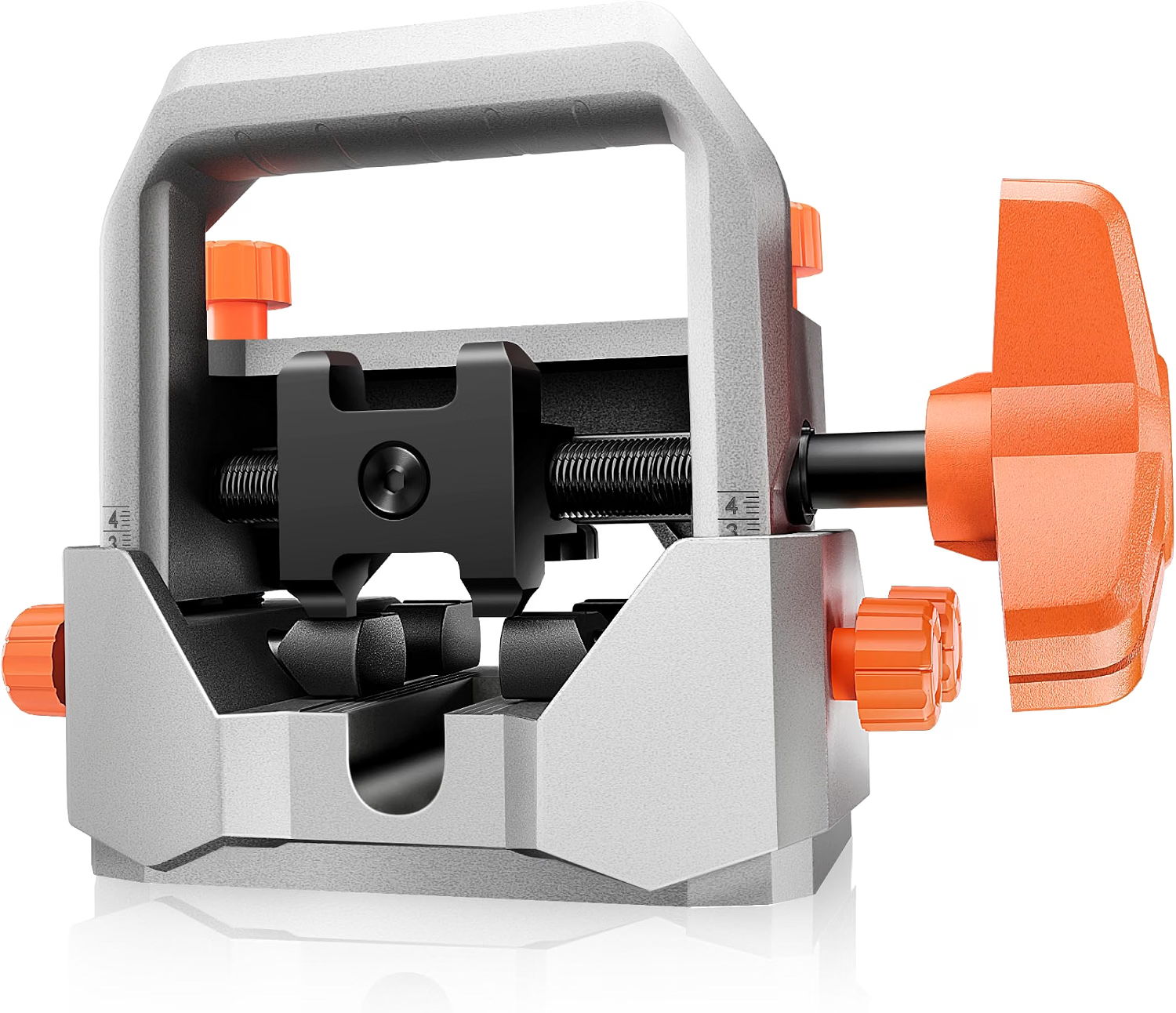
The WIREGEAR Broad Fit Sight Pusher Tool associated with the supplied Amazon listing is described as a heavy-duty sight-pushing tool intended for handgun applications. Its broad-fit concept is designed around compatibility with a range of handgun sight configurations rather than being limited to one specific model.
A tool of this type belongs more to the gunsmithing and equipment-maintenance category than to the sighting accessory category itself. Its purpose is mechanical: it provides a controlled way of supporting a slide and moving a compatible sight within its mounting channel.
Because the product is designed for firearm maintenance, safety should come before convenience. Any work involving a handgun should be performed only by a qualified adult in accordance with applicable laws, manufacturer instructions, and established firearm-safety procedures. The firearm should be completely unloaded and rendered safe before any inspection or maintenance begins, and users who are not familiar with the particular firearm should seek assistance from a qualified gunsmith.
This article focuses on the tool as a piece of gunsmithing equipment. It explains what a pistol sight pusher is, why its construction matters, how broad-fit designs differ from model-specific tools, what to consider when evaluating compatibility, and how this category compares with other sight-maintenance approaches.
Key Features
Dedicated Sight-Pushing Mechanism
The central feature of a pistol sight pusher is its mechanical pushing system.
A sight installed in a handgun slide may fit tightly within a dovetail channel. A dedicated pusher tool provides a controlled mechanical interface for applying pressure to the sight rather than depending on improvised impact methods.
The general principle is straightforward: the slide is supported by the tool, while a mechanical pusher contacts the appropriate portion of the sight.
This controlled design is one of the main reasons sight pushers are used in professional gunsmithing environments.
The exact operating procedure should always follow the tool manufacturer’s instructions and the firearm manufacturer’s guidance.
Broad-Fit Design
The product listing identifies the WIREGEAR tool as a broad-fit sight pusher.
A broad-fit tool is intended to accommodate a range of compatible handgun sight and slide configurations.
That can be useful for a gunsmith or maintenance professional who works with different firearm models.
However, “broad fit” should not be interpreted as universal compatibility.
Handgun slides vary considerably in:
- Width
- Dovetail dimensions
- Sight geometry
- Slide construction
- Rear-sight configuration
- Front-sight mounting systems
- Available clearance
Before using any sight pusher, compatibility should be confirmed for the exact firearm and sight combination.
Heavy-Duty Construction
The product title emphasizes heavy-duty construction.
A sight pusher is subjected to mechanical forces during operation, so structural rigidity is an important consideration.
A rigid frame helps maintain the relationship between the slide and the pushing mechanism.
If a tool flexes excessively under load, mechanical pressure may not be distributed as intended.
That does not mean that heavier construction automatically makes a tool appropriate for every firearm. Proper fit and correct support remain essential.
Supporting the Slide
A properly designed sight pusher provides a way to support the firearm slide while the sight is being serviced.
This is important because the slide needs to remain stable while mechanical pressure is applied.
A support structure also helps separate the mechanical work from the surrounding components.
The specific way the slide is positioned depends on the tool design and the firearm.
Users should not improvise support points if the manufacturer does not identify them as suitable.
Mechanical Adjustment
Sight pushers generally use a threaded mechanical mechanism to generate controlled horizontal pressure.
Compared with simply striking a sight, a threaded pusher allows force to be applied progressively.
That is useful from a mechanical-engineering perspective because gradual pressure can provide more control than an uncontrolled impact.
However, controlled force is not the same thing as unlimited force.
If a sight does not move as expected, increasing pressure indefinitely is not an appropriate solution. Resistance can indicate a compatibility problem, an incorrect setup, a retaining screw, or another mechanical issue.
Compact Gunsmithing Format
A sight pusher is generally much more specialized than a general-purpose workshop tool.
Its shape is designed around the dimensions and geometry of handgun slides.
This makes it a specialized piece of equipment for gunsmithing benches, firearm-maintenance workspaces, and professional repair environments.
What Is a Pistol Sight Pusher?
A pistol sight pusher is a mechanical gunsmithing tool used to move compatible handgun sights within their mounting channels.
Many handgun sights use dovetail-style mounting arrangements.
A dovetail is a mechanical interface in which the sight and slide have complementary angled surfaces. The geometry provides a secure fit once the sight is positioned correctly.
Because these sights can fit tightly, moving them may require considerable mechanical pressure.
A sight pusher provides a dedicated structure for that purpose.
The tool is not itself a sight.
It does not improve the optical properties of a handgun sight.
Instead, it is a maintenance and installation tool designed to work on the sight’s mechanical mounting system.
Why Sight Pushers Exist
A common reason specialized tools are used for mechanical maintenance is control.
Improvised methods can introduce several variables at once.
For example, a user might attempt to apply force through a punch or similar hand tool. That approach can potentially transfer impact to surrounding surfaces and may make it more difficult to control exactly where the force is applied.
A sight pusher changes the mechanical process by applying force through a threaded mechanism and a supporting frame.
This can provide more controlled mechanical movement.
The exact suitability depends on the tool, firearm, sight, and manufacturer’s specifications.
How It Can Be Used
Because this product is intended for firearm maintenance, the safest way to understand its use is at a general level rather than as a step-by-step firearm-modification procedure.
Gunsmithing Work
A qualified gunsmith may use a sight pusher as part of professional handgun sight service.
This can include situations where a compatible sight needs to be serviced or replaced.
The exact procedure depends on the firearm model and sight design.
Sight Maintenance
A sight pusher can form part of a professional maintenance toolkit.
It is particularly relevant when the sight uses a mounting arrangement that requires controlled lateral movement.
Workshop Use
For a professional gunsmith who services multiple handgun models, a broad-fit tool may be more versatile than a tool designed around one specific firearm.
The advantage is primarily equipment flexibility.
However, the gunsmith still needs to confirm the dimensions and compatibility of each firearm before applying mechanical pressure.
Training and Gunsmithing Education
A sight pusher can also be relevant to people studying professional gunsmithing.
Understanding how dovetail interfaces work, how mechanical force is transferred, and why specialized support fixtures are used can provide useful insight into firearm manufacturing and maintenance.
Practical work should be performed under appropriate professional supervision and according to applicable regulations.
Who It May Be Suitable For
Professional Gunsmiths
A sight pusher is primarily a specialized gunsmithing tool.
Professionals who service multiple handgun models may find broad compatibility useful because they can potentially use one fixture across different compatible configurations.
Firearm Repair Shops
Repair shops may use specialized sight-pushing equipment as part of their workshop tools.
The exact equipment required depends on the types of firearms serviced.
Experienced Maintenance Professionals
People with appropriate gunsmithing training may use a sight pusher when its specifications are confirmed to match the firearm and sight.
Gunsmithing Students
Students learning firearm maintenance may encounter sight pushers as examples of specialized mechanical fixtures.
Practical work should be performed in a properly supervised educational environment.
General Firearm Owners
For an ordinary firearm owner, ownership of a specialized sight pusher is not necessarily required.
If a sight needs service and the owner does not have appropriate training or compatible equipment, a qualified gunsmith may be the safer option.
Important Things to Consider
Broad Fit Does Not Mean Universal Fit
This is one of the most important points.
Handgun sights are not standardized across every manufacturer and model.
Two slides may look similar while using different dovetail dimensions.
A tool that works with one configuration may not safely support another.
Always verify compatibility before applying mechanical pressure.
Check the Sight Design
Front and rear sights can use different mounting methods.
Some rear sights use dovetail interfaces.
Some front sights use different attachment systems.
Therefore, a sight pusher intended for a particular type of mounting interface should not automatically be considered appropriate for every sight on the firearm.
Check for Retaining Hardware
Some sights include additional retaining hardware.
A retaining screw or similar component can prevent movement.
If such hardware is present, it must be addressed according to the firearm or sight manufacturer’s instructions.
A sight that does not move should not simply be subjected to increasing mechanical force.
Slide Material Matters
Handgun slides can be manufactured from different materials and may have different surface treatments.
The interface between the sight, tool, and slide should therefore be considered carefully.
Protective surfaces can also be vulnerable to damage if the tool is improperly positioned.
Support Is Critical
A sight pusher is only useful when the slide is properly supported.
The support structure should correspond to the tool manufacturer’s intended configuration.
Improvised support can create instability or transfer force to areas that were not designed to receive it.
Avoid Excessive Force
Mechanical tools can generate significant force.
That does not mean maximum force should be used.
If resistance appears unusual, stop and investigate the cause.
Potential reasons include:
- Incorrect compatibility
- A retaining component
- Improper positioning
- Damaged parts
- Incorrect sight dimensions
- Corrosion or contamination
Continuing to increase force without identifying the cause can damage equipment.
Protect the Finish
Firearm slides can have finishes that are vulnerable to scratches or dents.
A properly designed tool should contact the intended areas.
Users should follow the manufacturer’s recommendations concerning protective surfaces or inserts.
Use the Manufacturer’s Documentation
The tool’s instructions should take priority over generic online advice.
Similarly, the firearm manufacturer’s documentation should be consulted for the particular firearm.
If the two sets of instructions conflict, professional assistance should be sought rather than improvising.
Broad-Fit Versus Model-Specific Sight Pushers
Sight pushers can generally be divided into two broad categories.
Broad-Fit Designs
Broad-fit tools are intended to accommodate a range of compatible handgun configurations.
Potential advantages include:
- Greater versatility
- Useful for professional work
- Fewer specialized fixtures required
- Potential compatibility with multiple slide dimensions
The main consideration is that compatibility must still be confirmed for each firearm.
Model-Specific Designs
A model-specific sight pusher is designed around a narrower set of firearm dimensions.
Potential advantages include:
- Dedicated geometry
- Predictable fit for the intended model
- Less uncertainty about basic compatibility
The disadvantage is obvious: a tool designed around one configuration may have limited usefulness with other firearms.
Neither category should be considered universally appropriate.
Sight Pusher Versus Punch and Hammer
A punch and hammer represent a different mechanical approach.
A sight pusher applies force progressively through a threaded mechanism.
A punch-and-hammer method relies on impact.
From a tool-design perspective, the pusher offers greater control over how force is applied and where the mechanical interface contacts the sight.
That does not mean every sight pusher is appropriate for every firearm.
Professional gunsmithing equipment should be selected according to the firearm and sight specifications.
Sight Pusher Versus Professional Gunsmith Service
Another important comparison is between owning a tool and using professional service.
A firearm owner may be interested in performing basic maintenance independently.
However, sight work can involve tight mechanical interfaces and firearm-specific dimensions.
A professional gunsmith has access to specialized fixtures, measurement equipment, and experience with different sight systems.
For someone unfamiliar with the firearm or tool, professional service can eliminate uncertainty about compatibility and procedure.
Understanding Dovetail Sight Mounts
The dovetail interface is one of the most important concepts behind sight pushers.
A dovetail uses angled surfaces that interlock mechanically.
This design helps retain the sight while allowing it to be positioned during manufacturing or service.
Because the dimensions are closely matched, a sight may require substantial controlled pressure to move.
The exact dimensions vary by firearm manufacturer and model.
This is why sight compatibility cannot be determined simply by looking at the external shape of a sight.
Why Controlled Mechanical Force Matters
Mechanical force can be understood through a simple principle.
A threaded mechanism converts rotational movement into linear movement.
As the screw or shaft turns, the pusher moves forward.
This allows pressure to be increased gradually rather than applied all at once.
From a workshop perspective, gradual force provides an opportunity to observe how the component responds.
If a component does not move as expected, the process can be stopped before unnecessary force is applied.
This is one of the fundamental reasons specialized fixtures are used in precision mechanical work.
Maintenance of a Sight Pusher
Although a sight pusher is a relatively simple mechanical device, routine care can help preserve its usefulness.
Keep Threads Clean
The threaded mechanism should remain free of excessive dirt and debris.
Contamination can increase friction and make the tool harder to operate.
Inspect Contact Surfaces
The surfaces that contact the sight and slide should be checked for damage.
A damaged contact surface can potentially affect how force is transferred.
Check the Frame
Look for:
- Cracks
- Bending
- Deformation
- Loose components
- Damaged threads
A damaged mechanical fixture should not be relied upon for precision work.
Lubrication
If lubrication is recommended by the manufacturer, use the specified type and quantity.
Excessive lubricant can attract dust and debris.
Storage
Store the tool in a dry environment.
Avoid leaving precision mechanical tools exposed to moisture for long periods.
Safe Handling Considerations
Because this is a firearm-maintenance tool, safe handling principles are particularly important.
Before any work begins, the firearm should be completely unloaded.
This includes checking the chamber, magazine area, and other relevant areas according to the firearm manufacturer’s safety procedures.
A firearm should never be treated as unloaded merely because the magazine has been removed.
The firearm should be kept pointed in a safe direction, and ammunition should be separated from the maintenance workspace.
If there is any uncertainty about whether the firearm is safe to work on, stop and seek qualified assistance.
Legal and Professional Considerations
Firearm laws vary considerably between jurisdictions.
Rules can apply to:
- Firearm possession
- Gunsmithing
- Modifications
- Transportation
- Storage
- Commercial repair
- Sale of components
A sight pusher is a mechanical maintenance tool, but its intended use involves firearms.
Users should therefore make sure their activities comply with the laws that apply to them.
For commercial gunsmithing work, additional licensing or regulatory requirements may apply depending on jurisdiction.
Troubleshooting General Tool Issues
The Pusher Is Difficult to Turn
Possible causes include contamination, insufficient lubrication where lubrication is specified, mechanical damage, or excessive load.
Do not force the mechanism.
Inspect the tool and confirm that the setup is correct.
The Sight Does Not Move
A stationary sight does not necessarily mean that more force is required.
The firearm and sight should first be checked for compatibility and retaining hardware.
Professional assistance may be appropriate.
The Tool Appears to Flex
Unexpected flexing can indicate an unsuitable setup or excessive mechanical load.
Stop and inspect the tool.
A precision fixture should not be treated as a substitute for identifying the reason for unusual resistance.
The Slide Is Not Sitting Securely
Do not continue until the support arrangement is correct.
The slide should be supported according to the tool manufacturer’s intended configuration.
The Contact Surface Is Damaged
A damaged pusher tip or contact surface can affect how force is transferred.
Replacement parts or professional servicing may be necessary depending on the tool design.
Frequently Asked Questions
What is a pistol sight pusher?
A pistol sight pusher is a specialized gunsmithing fixture designed to move compatible handgun sights using controlled mechanical pressure.
What is the WIREGEAR sight pusher?
The WIREGEAR product associated with the supplied Amazon listing is a broad-fit handgun sight-pushing tool marketed with heavy-duty construction.
Is a sight pusher universal?
No.
Even broad-fit tools have compatibility limitations.
Handgun slides and sights can use different dimensions and mounting arrangements.
Why use a sight pusher?
A sight pusher provides controlled mechanical pressure and support for compatible sight assemblies.
Is a sight pusher better than a hammer?
The two tools work differently.
A pusher applies progressive mechanical pressure, while a hammer relies on impact.
The appropriate method depends on the firearm, sight, and manufacturer’s specifications.
Can one sight pusher work with different handguns?
A broad-fit design may accommodate multiple compatible configurations, but users must verify the specifications for each firearm.
Can it work with every rear sight?
No.
Rear-sight dimensions and mounting interfaces vary among handgun models.
Can it install front sights?
That depends on the specific front-sight design and the tool’s specifications.
A rear-sight pusher should not automatically be assumed to support every type of front sight.
What is a dovetail sight?
A dovetail sight uses angled mechanical surfaces that fit into a corresponding dovetail cut in the slide.
Why can handgun sights be difficult to move?
Dovetail sights are often fitted tightly, and their exact dimensions can vary by firearm model.
Should force be increased if the sight does not move?
Not automatically.
Resistance can indicate a compatibility problem, retaining hardware, incorrect positioning, or another mechanical issue.
The appropriate response is to stop and identify the cause rather than simply applying more force.
Can an inexperienced firearm owner use a sight pusher?
A sight pusher is specialized gunsmithing equipment. Anyone without appropriate training should consider using a qualified gunsmith rather than experimenting with a firearm-specific mechanical procedure.
Does a sight pusher change the firearm itself?
The tool is designed to service a sight rather than function as a firing component. However, sight installation or removal is still firearm maintenance and should be performed responsibly.
Can the tool damage a handgun?
Improper use, incompatibility, excessive force, or incorrect support can potentially damage firearm components or finishes.
This is why compatibility and manufacturer instructions are important.
Does the tool require electricity?
A conventional mechanical sight pusher does not require electricity.
Is the tool suitable for professional gunsmithing?
A broad-fit mechanical fixture can be relevant to professional gunsmithing, provided its specifications match the firearms being serviced.
How should the tool be stored?
Keep it dry and clean, protect the threaded mechanism from contamination, and store it where it will not be exposed to unnecessary impacts or moisture.
What should be checked before using it?
The firearm should be safely unloaded, the sight and slide should be compatible with the tool, the tool should be inspected for damage, and the manufacturer’s instructions should be reviewed.
What if the firearm model is not listed as compatible?
Do not assume compatibility based solely on appearance.
Consult the manufacturer or a qualified gunsmith before using the tool.
Does a broad-fit tool eliminate the need for a gunsmith?
No.
Professional gunsmithing can still be appropriate when compatibility is uncertain, when a component is unusually difficult to service, or when the user lacks the necessary training.
Conclusion
The WIREGEAR Broad Fit Pistol Sight Pusher Tool is a specialized mechanical fixture designed around the needs of handgun sight maintenance. Its purpose is not to function as a sight itself, but to provide a controlled mechanical interface for compatible handgun sight assemblies.
The heavy-duty construction and broad-fit concept are relevant to the type of work for which a sight pusher is intended. A rigid fixture can help maintain alignment between the slide and the pushing mechanism, while a threaded mechanical system allows force to be applied progressively.
At the same time, broad compatibility should never be interpreted as universal compatibility. Handgun sights and slides vary substantially in dimensions, mounting systems, retaining hardware, and physical geometry. Confirming compatibility with the specific firearm and sight is therefore one of the most important considerations.
A sight pusher also represents a different approach from improvised impact-based methods. Its primary value comes from controlled mechanical pressure and appropriate support. That does not eliminate the possibility of damage if the wrong setup is used or excessive force is applied.
For professional gunsmiths and experienced firearm-maintenance professionals, a broad-fit sight pusher can be a useful addition to a specialized workshop. For general firearm owners who are unfamiliar with sight installation or firearm-specific mechanical work, professional gunsmith service may be a more appropriate option.
Regardless of the application, firearm safety should remain the first consideration. The firearm must be completely unloaded before maintenance, ammunition should be kept away from the work area, and all applicable laws and manufacturer instructions should be followed.
A sight pusher is ultimately a precision maintenance fixture. Its usefulness depends less on applying maximum force and more on having the correct compatibility, proper support, appropriate equipment, and a clear understanding of the manufacturer’s specifications.
Leave a Reply